
Gardening in Ascot, North Ascot and South Ascot
Ascot is a small town in east Berkshire, part of the Royal Borough of Windsor and Maidenhead, and it is really three places in one: Ascot itself, North Ascot and South Ascot. The racecourse was laid out for Queen Anne in 1711 on open heath next to Windsor Great Park. Before that, most of the land here was heathland on the western side of Sunninghill parish.
That history still shows in local gardens. Much of the ground is light and sandy, it drains fast, and pine, birch and rhododendron grow happily in it. Lawns lose their colour quickly in a warm spell, while hedges and shrubs put on a surprising amount of growth after a wet one.
Challis Tringham Gardening Services looks after gardens of every size here, from family homes with a small lawn to larger plots with long boundary hedges and mature trees. We are a local, independent business, fully insured and holding a green waste licence. All of our equipment is fully electric, so visits are quiet for you and your neighbours. You can book us weekly, fortnightly or monthly, or for a single job when the garden needs it.
Hedge Cutting in Ascot
Hedges do a lot of work in Ascot. Laurel, yew, beech, privet and conifer screens line many roads and keep gardens private, but left alone they soon spread over paths and drives and take light away from borders and windows. A good trim keeps a hedge dense from top to bottom and stops it growing so tall that it becomes hard to manage.
Before we cut, we look through the hedge for nesting birds. The main nesting season runs from about March to August, and the Wildlife and Countryside Act 1981 protects any nest that is being built or used. If we find one, that part of the hedge is left until the young have flown. Most garden hedges are best trimmed once or twice a year, often in late summer. Conifers such as leylandii need extra care because they will not grow back from old brown wood, so they are cut little and often. Our hedge cutting page explains more.
Lawn Care in Ascot
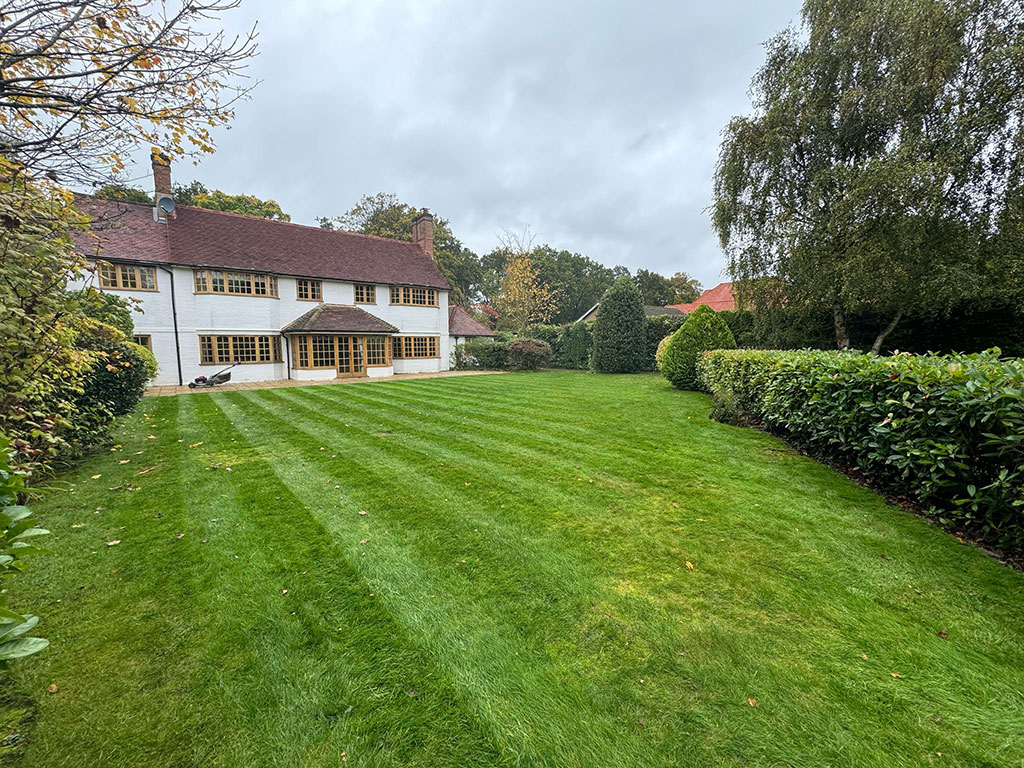
Sandy soil is kind to a lawn in a wet spring and hard on it in a dry summer. Grass on light ground browns quickly in hot weather, moss creeps in under trees and along shady boundaries, and fallen needles and leaves can smother patches if they are left lying. Our lawn care and grass cutting visits cover mowing, edging and keeping the surface clear, and we will tell you honestly what we see, whether that is moss, bare patches or a corner too shaded for grass to thrive.
Grass Cutting in Ascot
Regular cutting is the simplest way to keep a lawn thick and even. Through the main growing months most lawns need cutting every week or two. We take off no more than about a third of the blade at a time so the grass is not stressed, and we raise the height in dry weather so the lawn holds on to its moisture. The first cut of spring and the last of autumn are done on a high setting. Our electric mowers are quiet, which helps on early visits.
Garden Clearance in Ascot
A garden clearance deals with the jobs that pile up: a border that has got away from you, heaps of prunings, branches brought down in a windy spell, or a side passage full of leaves. We cut back, clear and load everything, then take the green waste away under our licence, so nothing is left in your bins or on the drive. It is a sensible way to make a fresh start before regular visits begin, or before a house goes on the market.
Garden Maintenance in Ascot
Once a garden is in order, regular maintenance keeps it there. A typical visit covers the lawn and its edges, weeding beds and borders, light pruning and a tidy of paths and patios, with the work changing as the seasons turn. You choose how often we come, and we agree what each visit covers before we start. For a wider look at what is included, see our garden maintenance page.
Grounds Maintenance in Ascot
Some properties need more than a garden service. Large private gardens, the shared grounds around blocks of flats and the outside of business premises all need lawns mown, hedges kept in line and paths clear on a regular basis. We take on both domestic and commercial grounds maintenance, agree a schedule that suits the site, and keep the standard steady from one visit to the next. More detail is on our grounds maintenance page.
Jungle Clearance in Ascot
Jungle clearance is for ground that has been left for years. On the sandy soils around Ascot that often means brambles, bracken, young birch and holly that have seeded themselves, and rhododendron that has spread well beyond where it was first planted. We cut it all back, clear the debris so you can see what you actually have, and take the waste away. Many people follow a clearance with regular visits so the growth does not creep back.
The Gardening Year in Ascot
Every season brings its own jobs. As a rough guide:
- Spring (March to May): first mowing of the year on a high setting, edges tidied, beds weeded, and hedges checked for nests before any trimming.
- Summer (June to August): mowing every week or two, with the blades raised in dry spells, and hedges trimmed once birds have finished nesting.
- Autumn (September to November): leaves and pine needles cleared from lawns and paths, a final hedge trim, and gutters emptied once the trees have dropped.
- Winter (December to February): clearance and cutting back while growth is slow, and patios and paths washed ready for spring.
End of Tenancy Gardening in Ascot
At the end of a tenancy, the garden is usually checked against the inventory made when the tenant moved in. An overgrown lawn or a hedge spilling over the pavement can hold up a deposit or delay the next let. We mow, trim hedges, weed beds and clear the green waste in one visit, working to the date you give us. Tenants, landlords and letting agents can all book this, and our end of tenancy gardening page has the details.
Gutter Cleaning in Ascot
Tall pines, oaks and birches are part of the character of Ascot, and they drop needles, leaves and seed into gutters through the year. Once a gutter is blocked, rain spills over the edge, marks the walls and soaks the ground beside the house. We clear the gutters so rainwater can reach the downpipes again. The best time to book is after the main leaf fall in autumn.
Pressure Washing in Ascot
Shade from trees keeps patios, paths and drives damp, and green algae and moss soon make them slippery underfoot. Pressure washing lifts the dirt and growth from paving, block paving and steps and brings back their original colour. It can be booked on its own or added to a garden maintenance visit, and we tell you what is included before we start.
Why Choose Challis Tringham Gardening Services
- A local, independent business founded by Daniel Challis
- Gardeners with years of hands on experience
- Fully insured
- Green waste licence, so waste leaves your property properly
- Fully electric equipment that is quiet and eco friendly
- Weekly, fortnightly or monthly visits, or one off jobs
- Domestic and commercial work
- A quote for each job before any work begins
Gardening Near Ascot
We work in the towns around Ascot too. If you live closer to the village of Sunningdale, see our Sunningdale page, and for homes towards the lake there is our Virginia Water page. Heading south into Surrey, our Camberley page covers the town and the places around it.
Frequently Asked Questions
When can hedges be cut in Ascot?
Garden hedges can be cut at any time of year, but extra care is needed from about March to August, when birds are most likely to be nesting. The law protects any active nest, so we check every hedge before we start and leave any section with a nest until it is empty. For most hedges, a trim in late summer and a light shape in spring or early autumn keeps them neat.
How short should grass be cut?
For an ordinary family lawn, around 2.5 to 4 centimetres through the summer is a good height, and a little longer in shade or during a dry spell. Cutting much shorter weakens the grass and lets moss and weeds move in, especially on sandy soil. The usual rule is to remove no more than a third of the blade each time.
Can you clear an overgrown garden in Ascot?
Yes. Whether it is a single bed that has got out of hand or a whole garden that has been left for years, we can cut it back, clear the growth and take the green waste away under our licence. We give you a quote for the job first. Once it is clear, we can set up regular visits to keep it that way, or leave you with a garden ready for whatever you plan next.